Millet Snacks: What to Buy
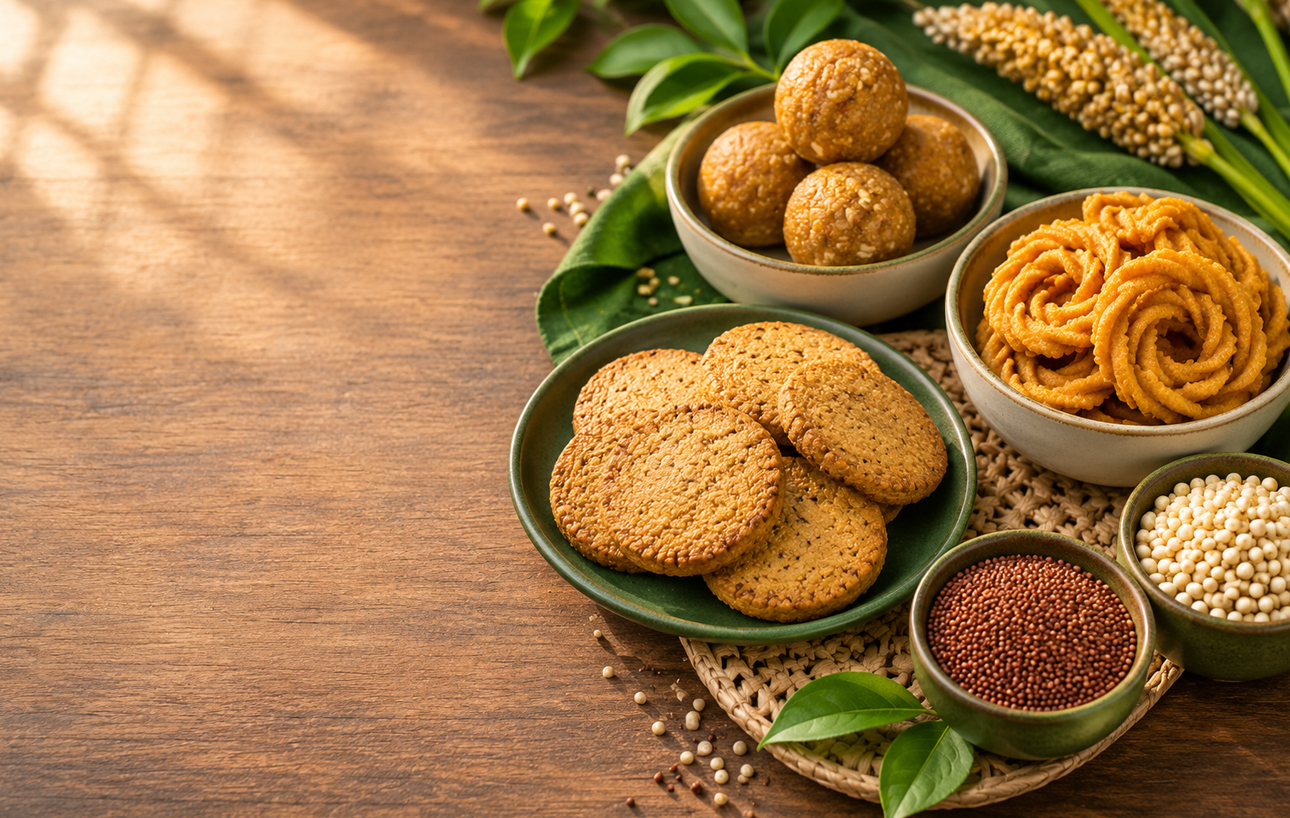
Walk into any store today and you will see more millet snacks than ever: biscuits, chips, laddus, muruku, noodles and more. That is good news, but it also makes choosing harder. Does “millet” on the front of the pack mean the snack is mostly millet? What should you look for on the back?
This guide explains the main types of millet snacks, the label checks that matter, and how to pick the right snack for tiffin, tea time, gifting or travel.
What are millet snacks?
Millet snacks are ready-to-eat or ready-to-cook foods made with millets such as ragi (finger millet), jowar (sorghum), bajra (pearl millet), foxtail, kodo, little millet, barnyard and browntop millet. Millet based snacks can be sweet or savoury, baked, roasted or fried, and many replace maida (refined wheat flour) with a millet flour.
Not every snack with “millet” on the pack is made mainly from millets, though. The label tells you the real story.
Types of millet snacks you can buy
Millet biscuits. A popular starting point for tea time and school tiffin. Look for biscuits made with a named millet, for example jowar, ragi or browntop millet, instead of a long list of mixed flours.
Millet laddus and sweets. A good choice for festivals, gifting and everyday sweet cravings. Check whether the sweetener is jaggery or refined sugar, and how much of the laddu is actually millet.
Millet muruku and savoury snacks. Crunchy and satisfying for evening snacking. Check the type of oil and the salt level on the pack.
Millet chips. Easy to find, but quality varies a lot. Compare the oil, salt and portion size, not just the word “millet”.
Ragi snacks and jowar snacks. Single-millet snacks are easy to understand. A ragi snack or a jowar snack should list that millet first, so you know what you are eating.
Ready-to-cook millet foods. Millet rava, idli rava, noodles, pasta and instant mixes are not snacks in the strict sense, but they make quick evening bites and breakfasts.
7 things to check before you buy millet snacks
- Read the ingredients list from the top. Ingredients are listed from the largest amount to the smallest. If millet flour is first, that is a good sign. If maida or sugar comes first, think again.
- Look for the millet by name. “Millet flour” is vague. “Ragi flour” or “jowar flour” tells you exactly what is inside.
- Check for maida. Many biscuits and noodles still use maida with a little millet added. Look for a clear “No Maida” claim and confirm it in the ingredients list.
- Look at the sweetener. Jaggery, refined sugar and added syrups are not the same. Pick snacks where you can see what sweetens them.
- Check the oil. For fried or baked savoury snacks, see which oil is used.
- Look for preservatives and additives. Shorter ingredient lists are easier to understand. Choose snacks without added preservatives if that matters to your family.
- Check the date, shelf life and FSSAI licence number. Every packaged food in India should show a manufacturing date or best-before date and an FSSAI licence number. Buy from brands that make this easy to see.
Quick label guide
What you see | Good sign | Check twice |
First ingredient | A named millet (ragi, jowar, bajra) | Maida, sugar or palm oil first |
Sweetener | Jaggery or a small amount of sugar | Several kinds of sugar or syrups |
Claims | “No Maida” confirmed in the ingredients | “Made with millets” and a long mixed-flour list |
Preservatives | None added | Long list of additives |
Pack details | Dates, batch number and FSSAI number clearly printed | Missing or unclear details |
Which millet snack for which moment?
- School tiffin: millet biscuits, plus a fruit or a quick millet upma
- Tea time: millet biscuits or a crunchy muruku
- Festivals and gifting: millet laddus with a touch of jaggery
- Office desk: biscuits or small laddus in an airtight box
- Travel: sealed biscuit packs that do not crumble or spoil easily
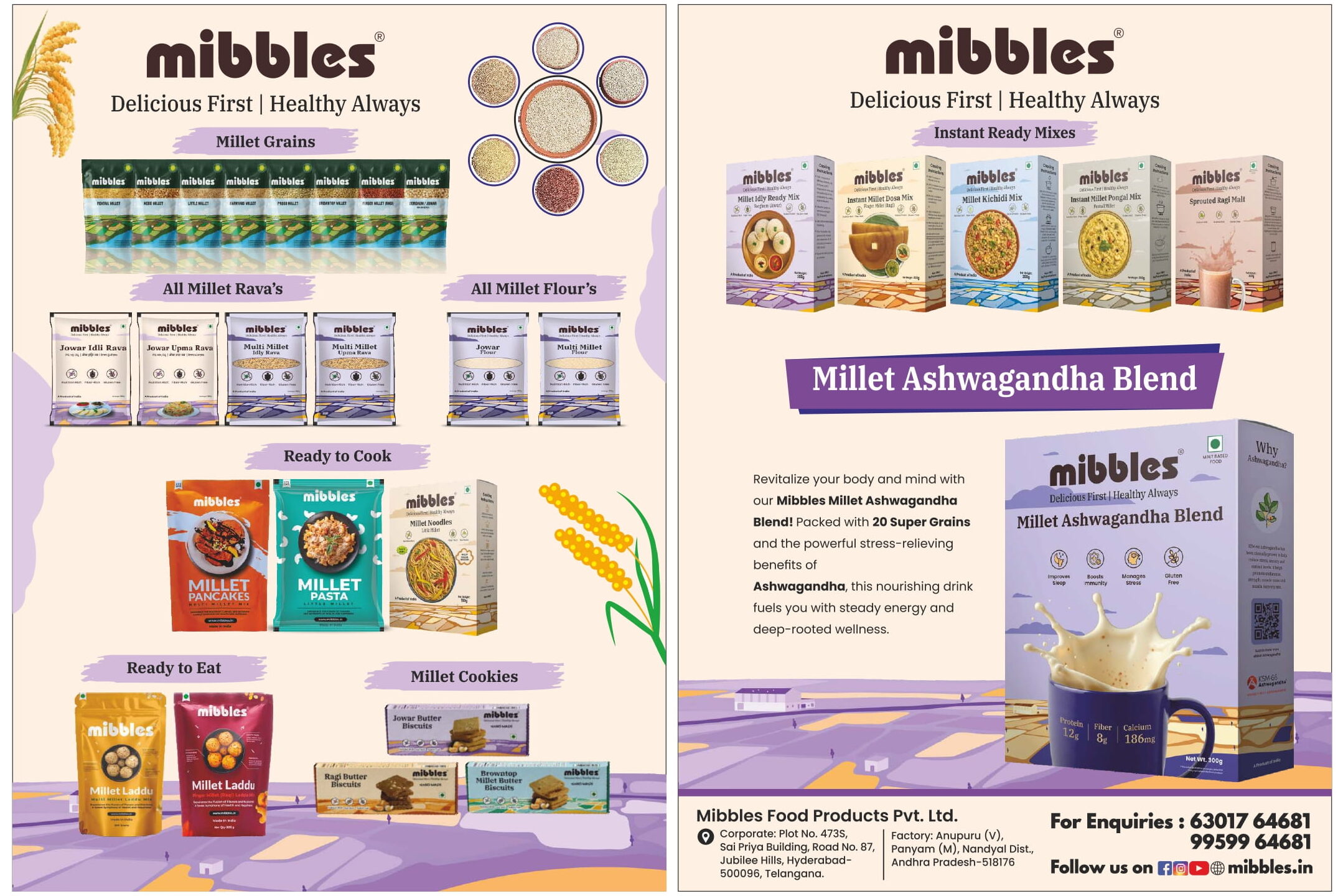
At Mibbles, our Healthy Bites range includes millet biscuits (jowar, finger millet and browntop millet), millet laddus made with a touch of jaggery, and millet muruku, all made without maida and without added preservatives.
Are millet snacks healthy?
Millets are traditional Indian grains, and swapping maida for a millet flour can make a snack more wholesome. But a snack is still a snack. The sugar, oil, salt and portion size all matter, so judge the whole product, not just the grain.
If you are choosing snacks for a health condition, for toddlers or for a special diet, talk to your doctor or dietitian first.
Smart buying tips
- Try one pack first. Taste and texture differ between brands and millets.
- Compare two or three labels. Use the checklist above.
- Look for transparency. A good brand shows ingredients, dates and quality certifications clearly. Mibbles is ISO 22000:2018 certified for food safety.
- Buying locally? If you search for millet biscuits near me, check the store’s stock and the pack dates. Many millet brands also deliver online.
- Store them well. Keep opened packs in an airtight container in a cool, dry place. See our guide on how to store millets for more tips.
FAQ
Snacks made with millets such as ragi, jowar, bajra or foxtail millet, including biscuits, laddus, muruku, chips and ready-to-cook foods.
? Millets are naturally gluten-free grains, but a packaged snack may also contain wheat or maida, or be made alongside gluten products. Always check the label.
Choose snacks with simple ingredients and little added sugar. Choose soft, age-appropriate options for small children and check with your paediatrician if unsure.
Follow the best-before date on the pack and store them airtight after opening.
Ready to try millet snacks?
Start with one pack of millet biscuits or a box of millet laddus, and use the checklist above to compare. Explore our Healthy Bites range at mibbles.in and tell us your favourite.